Friday, April 15, 2011

Intermittant Read: The Zombie Survival Guide (Max Brooks)


This spring has been chaotic (hosting a student teacher & working on a master's research paper), so I've found myself intermittently reading The Zombie Survival Guide by Max Brooks. He's also the author of WWZ (World War Zombie) which is slotted to be made into a movie starring Brad Pitt. The Zombie Survival Guide is meant as a companion to WWZ and is meant as a comical survival guide modeled after the many military guidebooks put out to help personnel prepare for various survival and war-time situations (think Field Manuals).

The Survival Guide covers how to prepare for various terrain (and which terrain to avoid at all costs), the best weapons and the best strategies for survival (not heroics!). The pictures are amusing and very reminiscent of the Army Field Manuals' cheesy depictions. However, instead of covering operations of dealing with terrorism or chemical warfare, the operations discuss the best methods for evading zombies (AKA ghouls) and the author even brings in some "first-hand" accounts to help explain why the guide suggest various tactics or weapons.

While some might find the idea of a zombie apocalypse terrifying or comical, the book is great for a mental evaluation of what anyone could/should do in any sort of chaotic every-woman-for-herself type situation. It's a fun little mental test to decide how prepared you would be if things "got real." And the truth be told, when I'm usually busy thinking about grammar research and lesson plans, sometimes I just like to envision myself as "Alice" from Resident Evil to take that brief trip from reality.

Saturday, March 26, 2011

Back to the beginning: The Choice (book 1)- (Spoiler Alert!)

I started my Amish adventures with book 2 of Suzanne Woods Fisher's Lancaster County Secrets Series. I just recently finished my third book from the series, but this book, The Choice, is actually the first book in the series. I can't say that I felt thoroughly confused about the order at all because the three books follow different families- so it isn't necessary to have read them in order (thank God!).

This book follows Carrie Weaver, who shortly after the book starts becomes Carrie Miller. The reader follows Carrie as she prepares to run away with her baseball-stricken boyfriend. Just as Carrie prepares to follow Solomon Riehl to the city, Carrie's father dies and she feels lost. Carrie's stepmother is cold and less than welcoming to Carrie and her younger brother Andy. Carrie desperately marries a young man who'd been trying to court her. She sees this as a way to protect Andy and give herself some security, even though she's in love with Solomon. Carrie also knows that Solomon won't be joining the Plain lifestyle until he gets baseball out of his system and until he hasn't realized the benefits of the Plain lifestyle.

Fisher blew me away with her choice to kill off three main characters by page 86. My jaw literally dropped by the time Carrie's new husband was killed in an accident- just as the two of them started to show some promise. Again, Fisher has chosen to use grief and blossoming love (in conjunction with trust) as themes. As well, I'm starting to think that buggies are death traps because it seems to be a choice method to kill-off a character because of the prevalence of such accidents (I think out of the three books there has been at least one fatal car-buggy accident per novel). The book is definitely a reminder of mortality and it seems that the Amish have to face death sooner than many English. It's hard to deny a family member's death when the body is laid out in the living room by the day following the death. It's a very harsh, but honest reality.

Aside from the mortality, there are more prominent English characters in this novel compared to the other two. It's very evident how prominent the English are in interfering with Amish life despite the Amish's hopes. And it's not that the Plain aren't willing to work with the English, but it's that Plain-English marriages result in either shunning of the Plain believer if he/she chooses to pursue the worldly way or the English person is expected to convert- which is very rare because it's so burdensome. Also, the English beliefs about land development and the Plain beliefs clash at times- which is evident in The Choice.

Along with the other two in the series, The Waiting (book 2) and The Search (book 3), I definitely recommend The Choice particularly as a therapeutic method for dealing with grief. that is, only if the person needing the relief is the type of person who's willing to face his/her fears head on and in a way that is able to see the big picture. For others unwilling to face fears or have difficulty dealing with change head-on, The Choice may be a hard pill to swallow because it deals with the tough truths of death head on. For me, it made me appreciate the uncertainty I've recently encountered with facing the possibility of a career change. It's reassuring to see characters face large changes and want to resist, but know that God has a plan for them... it's inspiring to little fish like me.

Friday, March 25, 2011

My Amish Addiction: The Search (Spoiler Alert!) by Suzanne Woods Fisher


I only finished reading The Search (book 3- I accidentally ready them out of order) three days ago and I'm already busting through another one (The Choice- which is book 1) of Suzanne Woods Fisher's books about Amish families in Lancaster County Pennsylvania. The books also make reference to some characters coming from Amish settlements in Ohio as well- and those Ohio-Amish are the progressive 'radicals' who do things like build barns with bolts rather than just nails... Ohio bred radicals like that. ;)

I'm already getting a little foggy on The Search only because I can't get this latest book, The Choice, off of my mind. I'm antsy to sit down and finish it too, but I know I need to spill my guts in order about The Search to my thoughts make the most sense.

Obviously I've become addicted to reading Fisher's work. The Search was fun read because it was about entirely new characters, but Caleb Zook, who was one of the main characters in the first book I read (The Waiting-book 2), popped up on the periphery. This book focused on Lainey O'Toole and Bess Reihl who are half sisters from what I can tell (but Bess doesn't find out about this secret until much later in the book).

The story starts off with Bess being sent to visit her grandmother in Lancaster County at the beginning of summer. We aren't sure why Bess has suddenly decided to visit, but it seems that there's some sort of good-hearted trickery on the behalf of the grandmother, Bertha, that initiates this visit. Meantime, Lainey O'Toole comes back to town and finds herself sucked in by a fateful car break-down. Bertha, being her tricky self, manages to welcome Lainey back to town in her gruff but loving way. Before we know it Bertha has also managed to good-heartedly "trick" her estranged son to coming to town to "rescue" her and Bess from jail.

The conflicts are numerous. Bertha shares with Lainey that she know about the "baby-swap" and grief and selfless love become major themes. With this, Lainey and Bertha try to figure out the right time to break the news to both Bess and her father, Jonah, that Bess is really Lainey's half sister and not Jonah's legitimate daughter. We also find out that Jonah's daughter really died with his wife in the buggy accident that left him with remaining physical maladies and Lainey swapped out the babies to protect Bess from the rough homelife Lainey endured.

While this main conflict plays out, other minor conflicts such as finding the polluter who's been destroying a nearby pond's ecosystem and a love triangle between Bess, Billy Lapp (Bertha's apprentice) and a cunning Amish bombshell keep the reader nail-biting with a box of tissues on standby.

I love Fisher's balanced approach to writing. There's some love to keep the romantics interested, but there's always some death and real-world manipulation to keep the cynics at bay. I also appreciate the fact marriage isn't one dimensional in her stories: she shows how it's used as a tool for creating bonds between families on both the physical as well as the financial level. As well, she shows the fact that 'love' sometimes gets in the way of reasoning, but that ultimately patience and selflessness always win out to determine whether or not a relationship should endure. I wish more people were given such a message when deciding whether or not to pursue relationships- I think this might prevent some discontent for young lovers.

My first complaint about the book was this: I read 291 pages and had didn't realize the story was set in the 1970s until I read the wedding date for one of the couples. It jarred me into the past, whereas I had been visualizing a modern day Amish story. I guess I should have remember that Caleb Zook and his story (Book 2) was taking place during Vietnam, but I'd totally forgotten because there hadn't really been any other obvious indicators to me about the era. I guess I'd dismissed the VW Bug breaking down to it simply being old (since you still see them around today- but mostly in rough shape). So, this may be my fault, but I found myself dissatisfied because it seemed like an unnecessary detail that could have allowed readers to connect on more levels and related on more levels if the story was left open to any time period.

With this being said, my second complaint/point of confusion was this: If Lainey and Bess are half sisters, I'm having a hard time deciding if they share a father or a mother...? Here's why this matters: If Lainey and Bess share a father, Simon, then it seems that the relationship between Lainey and Jonah that develops seems a bit incestuous because Simon is Jonah's uncle...

I mentioned both of these points of confusion to my mother-in-law, Anita, so I had to call her to see if she figured out the relationship (I'd already loaned the book to her because I'd knew she'd just love the story). She set me straight: 1. With the time period issue, early in the book it does hint at the time period because it mentions something about either Lainey or Bess's birthday and then it makes reference to how old she is in the book--which helps put the reader in the frame that it is indeed set in the late 60s & early 70s. 2. Simon is Jonah's uncle and here's how each girl's relationship breaks down with Simon: Simon & his wife get married & the wife brings her daughter, Lainey, with her to the family. Simon's wife then has Colleen with Simon and then the wife dies, leaving Simon responsible for Lainey and newborn Collen. Meantime, Jonah, his wife & their newborn get into a buggy accident. Jonah gets hospitalized, his wife and the baby die on the scene. Lainey shows up on the scene to help (has the baby, Colleen, with her?) and tells Jonah that his wife is dead, but the baby made it in order to give Jonah hope and a reason to continue to live and try to get better. So, when Lainey and Jonah get together later on (15+ years after the accident), Jonah is not related to her by blood, but he would technically be her step-uncle..?

I'm still not sure if I have this right, but I can definitely say that I've found myself thinking and talking about this novel- which are the reasons I enjoy reading. Why read it if you can't share it?
If you like a book with tasty layers, this book is definitely one for you. This would be a particularly good book for a book club because you could discuss this for hours without tiring of the numerous nuggets and the complex characters. And don't worry, I didn't even begin to tell enough about the book to do it justice. You'll just have to pick up a copy to see what I mean.
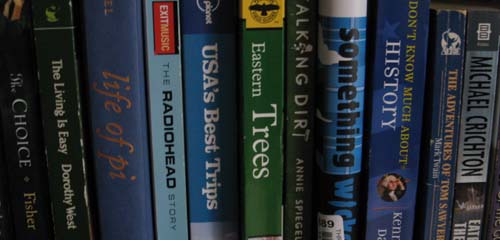
Tuesday, March 15, 2011

Split Second: David Baldacci


After numerous urgings from my husband, I finally read a David Baldacci book. My husband finally convinced me because he kept telling me about the main characters, Secret Service Agent Michelle (Mick) Maxwell and former Agent Sean King. I needed a fast paced book after my last read and I was tempted to find one that was a reliable standby, but I decided to be risky again.

The book I chose was Split Second, which is one of many of Baldacci's Michelle Maxwell books. Not that I didn't believe my husband's assessment of the book, but what finally got me to pick up the book was the fact that it supposedly had a strong female protagonist (my husband knows what a sucker I am for a girl who shows the guys how it's done). He was right. Michelle kicked butt and took names.

The story jumps around a bit between an assassination that happens under the security of Agent Sean King and then it jumps to a kidnapping that takes place on Michelle's time supervising a presidential candidate. One thing leads to another and the two agents become entangled and help one another even though their styles are different, but they realize that they're both being set up.

There are romantic tensions between Maxwell and King, but they merely flirt with the idea because they both become too involved simply trying to crack the case and protecting themselves from the "madmen" making attempts on their lives.

Toward the end of the story, it became complex enough that I had a little difficulty following who was motivated to do what and why they were so motivated. Usually I'm pretty good keeping such things straight, but there were enough stretches of motivation that I had to suspend my disbelief a bit and I just went with it. Did everything end up neatly tied with a bow? Yes. And I liked it that way. Sometimes it's just nice to have that feeling that the good guys will win. Was Michelle Maxwell a bit much to believe (Olympic rower, 4th degree blackbelt, etc.)? Yes. Was the "bad guy" unreasonably bad? Yes-- even to the point where I wanted him to be more human and less mechanically bad. My suggestion to make the bad guy scarier: follow the Joker's lead and allow the villain to calculate without over analyzing and enjoy the messiness more.

Never Let Me Go


Never Let Me Go by Kazuo Ishiguro caught my attention a few weeks ago as I was perusing the shelves of my high school's library. Something about the title struck me as interesting and when I read the blurb on the back cover; my interest was piqued because it looked somewhat futuristic and sad- leading me to believe there was some sort of mystery the main character would solve or some secret would be revealed to her in an untimely fashion. It's technically adult fiction, and I would agree on this "diagnosis" based on the peculiar obsession the main character/narrator has with trying to figure out the logistics of sex, which seems somewhat likely based on the progression of the main character's age and maturity, but it actually became a little bit annoying because I kept hoping the author would get back on track and tell the story. Apparently, I've become spoiled by YA fiction.

The gist is this: Kathy recounts the story of her "childhood". We find out that she is one of many students being raised in a group home and eventually all of these children will be educated and groomed to become full-time organ donors. The organ donation isn't a big secret, but the author doesn't exactly reveal this tidbit until a considerable chunk into the story (about 80 pages or so) and this fact doesn't necessarily create the conflict. So what is the conflict? The idea that maybe love can get the donors a temporary (3 year) reprieve. However, this "reprieve" doesn't turn out to be the legit.

What else pushes the story forward? There are strange "frenemy" tensions between the main character, Kathy and her good female friend, Ruth. It seems that the two girls keep one another at arms-length and a boy named Tommy seems to be partially to blame for this. It doesn't seem that Kathy is overly drawn to Tommy, but it seems that Ruth enjoys having Tommy on a string more than she actually enjoys being involved with him.

While I pushed through the book and the moral of the story seemed to be the same message as that of Brave New World or even 1984 (beware letting technology advance beyond or morality) , I can't say that I found it worth the time and effort. Many reviews praised the book repeatedly, but I didn't find it particularly witty or revelatory even after looking at other reviews for some insight. It definitely reminded me how artful some authors really are in that they make reading enjoyable-- Susan Beth Pfeffer, Suzanne Woods Fisher, Alex Garland, and David Baldacci. It just reminds me that it takes the rainy days to appreciate the sunshine.

Sunday, February 13, 2011

Wanting More of : The Waiting (Suzanne Woods Fisher)


As I've said numerous times before, friends and family love to recommend books to me because they know I talk with over 100 young readers a day (my students), so it's good to be versed in numerous genres and topics in order to encourage the reading 'magic' to happen. The latest book- yes, I believe in using the physical books because they don't burn up batteries or need charging- I finished, The Waiting by Suzanne Woods Fisher, was set in Amish Country in Pennsylvania. Who knew that Pennsylvania was such a hot place for book settings (see This World We Live In)?! I wasn't sold on reading the book, since I've grown such a fondness for reading about zombies and apocalypses. I gave it a try since my mom bought me a copy when she met the author again on one of her many birding escapades. Since getting involved with birding, mom has found herself in Amish Country (Near Ashland, Ohio) more than a few times, tracking down birds and sharing binoculars with Amish children. Therefore mom was particularly interested to hear my opinion of the book & the topic.

A couple of things struck me as fabulous about the book. First off, it made me cry. Not once, but three times! I'm not exactly a sappy person, but Fisher apparently found some of my soft spots (aside from the topic of Homelessness): Preparing for death with peace in the heart, loving so deeply that a person is willing to sacrifice his own wishes, & respect for God's creation/ destruction.

The basic story is this: A reluctant school teacher (Jorie) is waiting for her significant other to come home from the Vietnam War. Jorie's good friend, Mary Anne, finds out she has an aggressive form of cancer which will take her life in just a few weeks' time. Jorie finds out that her sig. other has passed away & his remains are returned to the family. Meantime, Mary Anne wants her husband to be happy and her children to be looked after, after her impending death, so Mary Anne urges her husband, Caleb (Cal), to marry Jorie once she finally succumbs to God's will (but Jorie doesn't know this). Caleb is reluctant to remarry and Jorie is seemingly the only female who actually encourages Caleb to take the time to let his heart heal before jumping into a new relationship/ marriage. The subplots include conflicts of the Plain (the Amish call themselves this) and the English, a loose cougar, and the comical relief of Caleb's desperate female suitors.

I've found myself talking about this book to friends and family constantly over the last week. My students can't believe that the book made me cry and my husband and I have been in numerous discussions about the poise of the Amish characters with trials and tribulations. It's easy to be hooked by the simplicity of life and it's refreshing to read a story with characters who are passionate about life and doing what's right for the group, rather than doing what's best for the individual. I think that the conflicts in this way are much more genuine than the average book out there right now; for instance, one character gets beaten mercilessly, but he refuses to report the beating because it's not the Plain way. Along these lines, the characters are actually developed into multi-dimensional characters. They are complex and even one of the seemingly "evil" character shows feelings and shows a new side of himself- and this is even more obvious because one of the "good" guys reacts to this transformation questioning the validity of the "evil" character's emotions.

After this reading experience (sobbing in my bed while reading and all!), I'm already interested in reading more of Suzanne Woods Fisher's work. It's just so refreshing to read something that isn't dealing with teenage pregnancy and drug use (but those topics have their places too) and to feel like the characters teach the audience positive ways to act and react to life and its ups and downs. I won't be forgetting this book anytime soon and expect to see more books from this series, The Lancaster County Series.

(Teachers: This book makes my short list of books to teach because there's substance for discussion, PG rating, and it's uplifting.)

Sunday, February 6, 2011

Susan Beth Pfeffer's: this world we live in *spoiler alert*


After trying to read One Flew Over the Cuckoo's Nest and giving up only 40 pages in, I was feeling a little disenchanted with reading. It's amazing how not being able to connect with a novel (or a professor or teacher, etc.) can kill any and all joy in a subject if you aren't able to connect. I'm also a bit thankful for such experiences because it reminds me that the vehicle for the message does matter; I once had a college prof make me hate Shakespeare within the first two days of his class, even though I'd been a life long Shakespeare reader. And while many people poo-poo quiting, I think that quiting creates opportunity, but there is some merit is sticking things out as well; but I found a long time ago that life is short and there are a lot of books out there to enjoy, so it's not worth 'sticking it out' unless the book is going to be used for a grade in a class. With that said, I ditched Ken Kesey and went back to my old steady, Susan Beth Pfeffer.


Susan Beth Pfeffer has managed to charm me with her post-apocalyptic series based on the moon getting knocked closer to the Earth. With the first and second book in the series under my belt (Life As We Knew It and The Dead and the Gone, respectively), I jumped in to This World We Live In whole-heartedly. My students know that I have a bit of a zombie & post-apocalypse fetish, so whenever a movie or a book comes out with these themes I get lots of recommendations- and thus I found out about the third book in the series. I got the book out Thursday morning and had it finished by Saturday night- which is unheard of for me since I'm usually grading till I'm blue in the face or I'm bouncing around between random other tasks- so consider this a strong recommendation for the book.


The story picks up with Miranda, a 17 year old girl, living in rural Pennsylvania with her mother and two brothers (they're the main characters from the 1st book, Life As We Knew It). They're scraping out a living since the previous year's apocalypse (the moon was knocked closer to the earth which meant screwed up tides, tsunamis, earthquakes, etc.). Jon and Matt, the brothers take a week-long trip to the river to catch fish and return not only with fish, but also a young woman nicknamed Syl, who Matt married while away for the fishing trip. Laura, Matt's mother isn't exactly pleased, but she welcomes Syl anyway and the family makes due. By some miracle never mentioned, Syl manages as a married woman but never becomes pregnant (which was my concern/prediction for the family).


Shortly thereafter, Miranda's father, step mother and newborn baby show up on the girl's doorstep. And, they're accompanied by a man named Charlie and two siblings from New York, Julie & Alex Morales (they're the characters from the 2nd book, The Dead and The Gone). the Evans household has now increased to 10 people and all of the characters realize that feeding 10 will be practically impossible unless desperate measure are taken. Hal, Miranda's dad, comes up with the plan to lie and say that the newcomers are all part of the deceased neighbor's family (Mrs. Nesbitt). With this lie, Hal & wife, baby, Julie, Alex & Charlie move into Mrs. Nesbitt's house, which is next door, and Hal & Miranda (Miranda is Hal's daughter) go to town to tell the city about the "Nesbitt family" having returned (this means that the newcomers are entitled to weekly bags of food).


Of course there's budding love between Julie and Jon and later between Alex and Miranda. The problem is that Alex has promised (his brother from Texas, who is a marine) to take Julie to a convent so that nuns may look after her and he plans to go live at a monastery in Ohio. Alex feels indebted to the Evans family and he wants to feel like he's earning his keep. Hal, Miranda, Alex and Julie make the trip to the convent only to find a lonely nun unable to take Julie. The four finally return to the Evans & Nesbitt houses to regroup. Alex and Miranda decide to run away with Julie to one of the safe camps. They let the family know that they're leaving and offer for others to join them, which the "Nesbitt" family decides to do, but not without a fight from the others.


The season finally starts to warm a bit and there are actually temperatures in the high 60s. (Which makes me think that the families could have at least begun to grow some cold weather crops, even if it was gray constantly.) Instead, the children continue to pilage houses throughout the town in order to find the basics before they leave for the safe camps. On the way home from such a trip, Alex and Miranda realize their minutes away from being hit by a tornado and they get home in time to warn their families.


The author throws a few unexpected twists in with the tornado and ultimately she lets the "hand of God" decide the fates of the characters, leaving the possiblity for a fourth book.