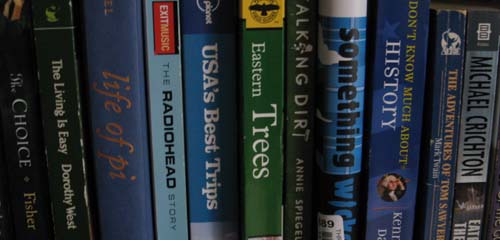
Saturday, August 11, 2012

Right On: A Long Way Gone (Memoirs of a Boy Soldier) by Ishmael Beah

Peer pressure got to me again.  I kept seeing A Long Way Gone on friends' desks and counterspaces until I ran across the book at a book sale in Athens at the local library.  The author, Ishmael Beah, had recently spoken at Ohio University and a vaguely remembered seeing flyers posted for the discussion, but I was unable to attend.  A year after letting the book ferment in my classroom (a couple of students did pick it up and check it out from my little library), I brought it home with my crate of library books and put it on my summer reading list.   


After reading I Am A Seal Team Six Warrior (I blogged about this a few weeks back), I was interested in reading more about some of the chaos in Africa (insert TIA song by K'Naan here (unedited)) since I knew very little about what actually led up to the issues in such places as Liberia, Sierra Leone, & Somalia.  Beah, a Sierra Leonean, begins his story with the first day he remembered the rumors about rebel fighting and the rebels dispersing people within his village--essentially leaving him without family.  It seemed that every time Beah thought he could get back to a normal state, then suddenly rebels would show up, hack some people up, give themselves high-fives and brag about the slaughterings.  Beah, who is only 12 at the beginning of the story, becomes a refugee wandering and at times running through the wilderness with a handful of his buddies and his older brother.  He stumbles across small groups of refugees and some embrace the boys and others view them with disdain.  Many are afraid that the boys are really just rebels waiting to take advantage of them.  One town even takes away their shoes and chases them away across sand that burns their feet and leaves them incapacitated for more than a week. 

Eventually, the boys get taken in by a village and they are cared for and help out accordingly.  The rebels begin to attack the village and the village assembles a guerrilla force to take on the rebels, which is led by a general of some sort (his origins are pretty vague and downright questionable).  The boys, seeing little to lose, are conscripted into the makeshift army. Within the army, the boys take the rebels on with the aid of AK47s, G3s, machetes, marijuana and "brown brown" (a gunpowder & cocaine mixture).  The drugs keep the boys dependent on the army for the adrenaline high, the violence and then they aren't worried about what's to eat-- since food is so scarce. 

The boys continue to kill and be killed by the rebels and are fueled by their personal losses of family and friends.  After a considerable amount of time on drugs and ransacking rebel forces, a handful of men from the UN show up at the camp and talk the with the general.  The boys are shuttled of with the strangers and have their guns taken away.  Only after the boys are in the city at a rehabilitation clinic for a  while does Ishmael realize that he's being forced to undergo treatment for being a childhood soldier.  He does a nice job expressing his naivete through describing his thoughts and frustrations at being left out of the loop, after being forced into an adult role of taking lives and caring for himself. While it would seem that the violence would end with Beah's rehabilitation, it's really just becomes the beginning of the war within the city-- which had previously been confided to the outlying areas.  With Beah's rehabilitation and his realization of his lost youth, Beah is again forced into an adult role in that he takes on living with his uncle's family and he also becomes a representative to the UN for the needs of the war-torn children, particularly the child-soldiers.

Beah's lot does improve, but only after a few more twists and turns as he tries to evacuate the country, realizing the risk at which he was putting his uncle's family if he remained in their home.  His willingness to speak honestly and to reflect on his previous immaturity and selfishness create bonds which later come to his aid and while make his story so compelling.  This book would be a fabulous book for anyone who considers him or herself an advocate for social change-- particularly if it involves working with disenfranchised youth.  

Friday, August 10, 2012

Just Another Teen Dystopia? (The Giver by Lois Lowry)


I'd heard of the book The Giver for years.  And for years I just couldn't quite hype myself up to read it, so I put it on my reading to-do list for this summer and I finally did it.  I've had several people recommend it to me, but of course, now I can't remember who-- which is probably for the better because I may just give him/her a hard time about it.

I thought there were some interesting ideas going on within the book, which I did appreciate.  The main concept is that all hazards of life have basically been eradicated, leaving the citizens with practically no choice.  I guess I immediately saw it as the age old debate from Judeo-Christians regarding free-will and whether or not free-will exists (or if God has taken away free-will--- particularly when looking at stories like that of Judas Iscariot and his betrayal of Christ). I liked this aspect of the book, but because the book seemed geared for an 8th grade reading level (and thus audience?), I felt that I may have been pulling a bit more out of it than the average reader would have pulled from it. The society within the book determines how many children will be birthed and kept, who is eligible to raise these children, who each person may marry (if anyone), the occupation of each person and finally, everything is viewed only in shades of the black/white scale (unless a character does something to overcome this-- which a few do).

The main character is Jonas and his story begins with him preparing for the ceremony during which he'll receive his occupation.  He has a few friends, a male and a female, with which the audience is able to see what a "normal" occupational selection would look like, because Jonas's is anything but.  Instead of having his occupation selected and being recognized, Jonas is "passed over" and then he is recognized specially at the end of the ceremony by being chosen as the "Receiver of Memory."  This means that Jonas will begin to report to the "Giver of Memory" in order to receive the collective memories of the society-- i.e. war, pain, love, etc.  

As Jonas begins his new job, he receives new rules by which he must live-- and some of these go directly against how he's been raised.  For instance, he's now encouraged to lie if necessary and to ask anyone any question.  These rules and the new job brings about a new awareness for Jonas, which is classic of coming of age stories like this.  Jonas is also increasingly drawn to the baby which his father has brought home since Jonas's father is in charge of the newborns.  This new awareness and the realization that the baby, which the family has taken to calling Gabriel (even though the baby shouldn't have a name yet because it's against policy), means that Jonas builds a particularly strong bond with Gabriel and Jonas ends up kidnapping Gabriel because Jonas realizes that his father will be putting him to death in the morning. 

I liked the action and the ease of the language, but I couldn't help but be put off by the ending.  I was just left with too many questions and an overwhelming feeling of incompleteness.  While I liked the book in that it would probably be a great book to use for a discussion group-- especially one that may connect with philosophy or religion-- I haven't found myself recommending it to anyone.

Sunday, July 29, 2012

About face: I Am A Seal Team Six Warrior (Wasdin & Templin)


After Nicholas Sparks, I promised myself to get back to the grit I usually like to read, so I dug "I Am A Seal Team Six Warrior" out of my borrowed crate of books.  I needed some kick-ass inspiration that would tell me to quit being a sissy and get out there for my distance runs and to bust out some push-ups just for fun. I found it with "Seal Team Six Warrior."

Usually I get annoyed with authors and their frilly, unnecessary language, so I was refreshed and even a bit taken aback when I realized there were no spare words in this book. It was so stripped down that it almost felt naked.  I was almost embarrassed for the author at times because it just stated the facts so plainly that at times I actually wondered if I was reading it right and I even wondered if there was some hidden metaphor and I'd realize later that it was EXACTLY as Wasdin had intended it. 

Wasdin told about being raised in an abusive household and how he felt it helped mentally prepare him for his training as a SEAL.  He also used such a matter-of-fact tone that at times it would have seemed that he was bragging, but then there were so many flashes of humility through naivete that I realized he was just writing as he saw it without trying to make himself look cooler (or conversely, less-cool) that he really was.

Wasdin told about the multiple phases of training and supervised torture that was considered preparation for missions. With this, I particularly enjoyed the pictures he provided, even though some of them had his fellow-soldiers' faces blacked out-- no doubt to protect their identities.  Other pictures, provided by the Department of Defense and the State Department were very revelatory-- they showed the training conditions, some of the weapons and some of the terrain.

I particularly enjoyed Wasdin's anecdotes of fellow SEALs and snipers-- including a water rescue in which he returned in merely his underwear and how to create the best ghillie suits.  The key:  don't use too many grasses because they dry out quickly and then become a giveaway. Wasdin also does a nice job telling about their co-operations (or challenges) with Delta Force, the CIA and other government agencies; he tells of their egos getting in the way in such a way that he's remorseful and still pride-filled. 

As the book progresses Wasdin tells a lot about the key players his team was after while dealing with Desert Shield (Iraq, Iran & Kuwait) and later with in Somalia. There were lots of names of key players thrown out, but I felt like few stuck with me, and at the same time I was reminded of the large similarities of Wasdin's team's challenges and what I hear about daily regarding insurgents in Afghanistan, Pakistan and the rebels and dictator within Syria (and last year-- with Egypt).  His story, while almost twenty years old, is still timely and a great tool for connecting our previous conflicts with today's conflicts. 

While I was reading this book with my high school students in mind, and I do feel that they'd be interested in this book, I feel this book would best connect with a freshmen military science class or even a political science class studying the Middle East and Somalia because of some of the deeper connections that could easily loose readers without some of this background knowledge (I was once a poli. sci & military science student so I feel that I may be a little exceptional in my connection).  Once I settled into the style of the book, I flew through it in just a couple of days and I noticed earlier this evening that Wasdin & Templin have another book out about Seal Team Six and it's about the outcasts, but it may need to wait until I finish a few other books I have waiting to be read and returned to their owners. 

Saturday, July 21, 2012

ALMOST eating my words about Nicholas Sparks (Safe Haven)


I confess: I have written haikus about Nicholas Sparks and all terrible-ness that he represents. I love to hate the idea of Nicholas Sparks. I must admit I forced myself to watch both Dear John and The Notebook-- knowing that I'd probably be mad afterward, but I was sick of being out of the cultural loop.  So, I pulled the trigger.   Why did I dislike him without being familiar with his work? He represents much of what I find terrible about women:  hopeless romanticism, the inability to move on (is there a word for this?), and strong men rescuing feeble women. I actually wondered if Nicholas Sparks was a woman secretly writing with an alias so that women would swoon at the idea of a man being so sensitive to write such sap... but instead, I'm pretty sure it really is just a sappy (or secretly macho?)  man who has alienated some strong women (my little sister also has a strong distaste for his work). With this disclaimer out there about my prejudices, here's what I actually thought about his reading (since I decided it was time to quite talking smack without having actually read his work).

Safe Haven is predominantly set in North Carolina, like Dear John and The Notebook also seemed to be (Sparks lives in NC).  The protagonist is a late twenty-something named Katie.  Katie is starting a life in North Carolina because her husband, who she's run away from, beat the hell out of her on multiple occasions.   She waitresses to support herself and pay for a small cottage off a back road.  Katie meets the local grocer, who is a widower with two children and they slowly build a relationship.  In the meantime a woman moves into the cottage next to Katie's and the two women become friends and the friend, Jo, counsels/gossips with Katie regarding the relationship.

The relationship progresses slowly since the two are both trying to get over their spouses-- one who was an abuser and the other, a victim of cancer. As Katie and the grocer, Alex, become increasingly acquainted, the readers find out more about how Katie escaped from her estranged husband and we find out he's most likely looking for her.  We also find out that the estranged husband is a police detective, which lends to the credibility of the story as to why Katie is so terrified that her husband will come to find her.

The reader is also able to get more about the estranged husband, Kevin, through sections told from his perspective. It works for a few reasons:  It helps build the suspense as he finally picks up her trail and comes after her and it shows that Sparks can effectively switch the storytelling perspective and he can execute this switch well.

While I flew through the story because it had some edgy-ness to it (dealing with issues of abuse), I liked the resolution of the main conflict (no, I won't spoil it for you), but I can't say I liked the final twist (which I am going to spoil).  The final twist?  Her friend, Jo, is the ghost of Alex's deceased wife.... That's right. A GHOST.   Booo....  (and not in the ghost-sort-of-way).  I couldn't help but felt like I'd been slapped for reading the whole book and then getting something so cheesy.  I guess I got what I was looking for-- cheese.  It was just such a shame because it was such easy reading and mostly believable story (although then when I looked back Kevin's word choice seemed over the top) and I was just getting to the point where I could defend Sparks... and then, I couldn't.  

Monday, July 2, 2012

I don't know either: What My Mother Doesn't Know (Sonya Sones)

 Since I finished On Writing, I've started burning through a few books over the past week.  I took two evenings to read What My Mother Doesn't Know by Sonya Sones-- which was really more like 2 1/2 hours of reading. It was a particularly fast read because it was written in lyric poetry (which is almost so common now that it's a slacker's version of story telling).  I enjoyed having something light-hearted and easy to read, but I'm ambivalent about whether or not to recommend it.

The story follows a teenage girl (almost 15) named Sophie who is boy crazy and has two equally boy-crazy girlfriends.  Sophie's parents are on the verge of a divorce and Sophie is trying out what it means to be an attractive young woman.  She seems to feed on the attention and is desperately in love with her new boyfriend Dylan. The only problem is that Dylan and Sophie don't really seem to have anything in common and we later find out that Dylan's mom has some issues with anti-Semitism, which doesn't bode well for Sophie since she's Jewish.

Sophie also begins to entertain the acquaintaince of a fellow chatroom-goer... but then she starts to feel guilty and luckily finds out he's a bit more pervy than what she's looking for.  Sophie particularly kicks herself for spending so much time with the pervert because she was toying with the idea of meeting him in person. 

Meanwhile, Sophie secretly entertains the idea of getting affectionate with a nerd named Murphy that she often spends time feeling sorry for.  Her thoughts keep creeping up on her and she stifles them when possible.

Overall, the book was compelling because Sophie has some rebellious moments and I kept hoping she'd have some more-- since I was curious about the book title.  I was hoping for something really juicy that would put her in a bad situation that she'd need to deal with.  I was a bit disappointed in this way in that I never really felt like there was a climax.  Sophie mainly has a series of small rebellions that we can only assume come from being a teen and/or come from her misdirected angst regarding her parents' impending divorce. 

I'm torn in that I liked that there wasn't MAJOR drama, but I also didn't feel like I could take away any lessons either. 

Sunday, June 24, 2012

Well, well, well... (On Writing Well by William Zinsser)


I just finished On Writing Well.  It took me nearly two months.  With that said, I'm ambivalent about the book.  I'm not sure if my hopes were too lofty for it or if I was just getting tripped up by the long excerpts from other texts.

I picked up the book a few months back when I was at a second hand book store looking for some basic herb gardening books for one of my students.  I found the herb books and couldn't pass up On Writing Well because I kept seeing the name pop up in other writers' books about writing. As a teacher and wanna-be editor I figured that the book would give some insight to the writing trade.

I liked Zinsser's basic philosophies on writing: keep it simple, but fresh, trust your gut, and be concerned about quality and the rest will follow.

On the otherhand, while I'm a nerd for the topic, I felt that the book was 50-100 pages longer than it should have been.  I'm a stickler for concise writing and for the book being on its 6th edition, I felt that the quality suffered because of his desire to let the reader sample so much of other authors' writing.  I felt that the "samples" became gluttonous and often overwhelmed the message.  I enjoyed Zinsser's essays within the book, particularly one about Timbuktu, but I felt that using such long excerpts was destracting and tip-toed the line of self promotion. 

I did highlight and bookmark several segments to share with my students and I even toyed with the idea of requiring parts of the book for reading, but then as I caught myself drifting and becoming disengaged at times, I couldn't rationalize requiring the book, or even whole chapters, as required reading.   

Tuesday, April 10, 2012

Purgatory? or studying for GRE Math?

(Photo from http://www.amazon.com/Barrons-New-GRE-19th-Edition/dp/0764146165)
I'm exasperated.  I've been studying for GRE (Graduate Record Examination) the past hour and a half.  And just so everyone knows, I'm definitely a writer and not a math-champ, though I do have a strong appreciation for math and I always appreciate a bit of mental gymnastics.  I'm hoping that if I score well on the test I might have a better idea what options I have for returning to school for additional graduate level classes including the possibility of a Ph.D.(?!).  Even with my lofty goals in mind, I had to give it a rest for the night because I'm too spent and a little too frustrated to make much more progress for the night.  I was hoping to score several more points on the GRE this time around, compared with my hap-hazard GRE score from seven years ago, so I even went to the point of pre-reading a few study guides from the library and then I broke down and bought a used study guide-- Barron's New GRE (19th edition by Green & Wolf).  While I feel it must be helping me, I've got mixed feelings about the book. 

The first big thing I had to consider when choosing a book was the fact that the GRE has changed a bit since I took it last.  I'm not sure what all has changed on the exam except for the fact that there will be a new experimental section and it sound like there may even be experimental questions mixed in with the other questions. I mainly bought the book for a few potential writing prompts, a quick review of what to expect for the reading section, and ESPECIALLY for the math review.  I know math is not my forte, despite my dedication to my math classes in high school.  It was one area that just never came naturally for me, but I always appreciated it for the challenge.  As is, I've been trying to remind myself that I do ENJOY the challenge.  I know: I'm a little sick like that.  Nonetheless, the book has been helping for the most part.

I have become stumped a few times though when the authors jumped ahead on some steps without explaining the seemingly self-explanatory reason for jumping ahead.  I often find myself writing the steps out in the book to see just where the author came up with the next numbers in the sequence.  Even then, I've still found myself stumped enough that I've made notes on Post-Its to remind myself to address these questions with one of my buddies who happens to be a math guru.  And while I am a bit at a loss with some math, I am still a pretty strong reader and a pretty logical person, so it seems that there may be some lacking explanations on some of the concepts.

As well, the organization of the book is interesting and I can understand why the editors/ authors choose to organize it accordingly, but as far as actual usability, there should be some serious reorganization.  The book starts off with a diagnostic test, but there's no rubric for the written portion, so even if I wanted to grade my own written portion (or have a colleague do it for me), I could only guess as to the breakdown of the points.  Even I try to give my students some sort of rubric, so I was a bit surprised there would even be a writing area (with lines provided) rather than just listing numerous prompts.  This seemed a bit contradictory. The math section, which has been my main focus, was also a bit daunting in that there are tactics broken down in a logical and progressive order, but then key aspects (such as formula and other easily forgotten math facts) are listed in a separate area named Key Facts toward the end of the book.  What ended up happening as I was trying to learn these tactics is that I then became so stumped on some of these missing elements that I just jumped straight back to the key facts section to review all aspects, figuring that I could skim the areas I knew really well and then systematically focus on my weak areas.

With T-10 days to go until the test I'm feeling pretty intimidated, but I know I must be in a mildly better spot than I was two weeks ago.  Either way... I'm hoping I know something, since I'm recognizing how little I really know.