Monday, February 18, 2013

The Subversive Copy Editor (by Carol Fisher Saller)

 Because I'm a total N-E-R-D, I sometimes like to read about grammar and the best practices for writing and editing.  When I was younger I used to actually debate my step-dad about issues of grammar because much of it simply didn't make sense.  By the time I made it to high school and college, I decided to tackle the issue head-on by learning a foreign language (German) and learning the second language helped me understand that I'd been right all of those years:  English grammar is simply crazy, especially compared to other languages. I still find myself stumped by grammar at times, but rather than viewing it as a nemesis, I've taken the perspective that it's simply like a tricky and sometimes fickle friend and it just takes more studying to understand this friend's perspective. This shift had to happen in order to become comfortable with not simply always knowing the answer, and I think that because of this potential for mystery, I'm still reading and researching about grammar on my own time. This affinity may explain why I teach English despite hating grammar throughout elementary and high school.

Partially because of my interest in grammar and my role teaching English, I've gained the reputation for really knowing and enjoying grammar.  And, when I don't know it, my students know I'll look it up or make them look it up, but they also know that I'm willing to let them experiment with style. I try to remind them that grammar is an ever-changing creature, especially with factors like technology and pop-culture influencing word usage and structure. 

I think I enjoyed The Subversive Copy Editor for this reason; it didn't take itself too seriously.  Carol Fisher Saller poked fun at both herself and at the editor stereotype, by feeding in to it and also by subverting it by assuring aspiring editors that it's sometimes ok not to fixate on an issue.  Sometimes that argument just isn't worth it and it's all about knowing when to drop it.  This book isn't a handbook for grammar, but it is a book of recommendations for dealing with the text and most importantly, for dealing with the people connected with the text (other editors, the writers and any supervisors).  It's not a grammar book as much as a "people-book" for those with grammar-based jobs.

A few things I learned?  "Stet" means "as it stands." (I believe in Latin... if I'm remembering correctly?)  This is basically the term that editors use to tell others that the correction needs to revert back to the original text.  More than anything, I just enjoyed the new word and seeing it repeatedly in context in order to solidify it into my vocabulary "schema."  What else did I learn?  I was reminded of the importance of logging tasks accomplished in order to bill clients accordingly.  It seems so basic, but at the end of the day it's an easy thing to forget to do.  Particularly when there's a new to-do list waiting to be accomplished, it's easy to put the basic paperwork on "the back burner" because you'll remember how many hours you've logged... right?... RIGHT?

Overall, the book was a solid little read that worked well in 20 page chunks and at about 120 pages, it was a palette cleansing read.  It was exactly what I needed to clear my mind of other recent reading failures in order to look at my stack of books with a fresh and open perspective. 
 

Monday, February 4, 2013

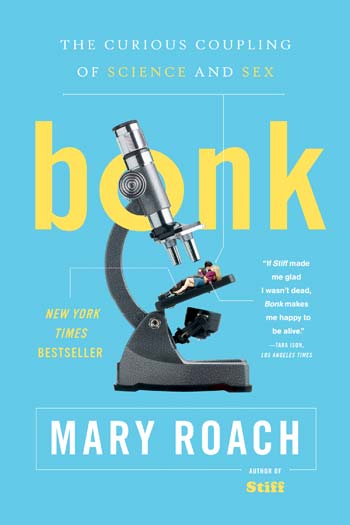
Cringing and Shrieking: Bonk by Mary Roach (mature topics)

 While home over Winter Break my mother and I got into a scientific discussion about sex because she'd been reading the book Bonk by Mary Roach.    My husband stuck around for a few minutes of the conversation before he deemed the content to mature for him, as he ducked out to catch up on some sports highlights.  In the meantime my mother was stunning me about her ridiculous knowledge about pig sex and she suggested that I might get a kick out of Mary Roach's latest research which brings together sex and science. 

Mary Roach is most notable for her book Stiff which is about the lives of cadavers.  It's a bit gruesome and definitely not for the faint of heart, which I'd also say about Bonk.  At times I found myself shrieking with laughter because the odd things that had been revealed during the various research stages and with the descriptions of sex toys, surgeries and talk of animal reproduction. At other times, I found myself crossing my legs out of sympathy for those poor souls who inadvertently helped out with the research the hard way (no pun intended). 

I found myself reading the book in short doses at home because there were times when I could only handle so much reading about orgasms and erectile dysfunction before someone in public would ask me what I was reading or before it began to feel like work, and sometimes you just don't feel like having that conversation with strangers and you don't want to make thinking about sex into work.  In some ways, I felt it necessary to put the book down because I was afraid it would spoil some of the mystery and almost some of the allure-- but it didn't. Instead, it walked the fine line of being informative without being straight up smut.  Believe me, it was a long way from 50 Shades of Grey, because I didn't want to punch anyone in the face once I was finished (I can't say the same about the characters in 50 Shades) and it was actually quite pleasant to read about couples who would actually give a damn about the other person's feelings and sexual experiences-- rather than being self absorbed and self serving.  

The parts I enjoyed the most about the book were the discussions describing what measures the various researchers would go to to find subjects and get approval for their studies.  It was also centering to have the actual facts on some of the norms regarding sex organ and behaviors and not just some skewed perspective based coming from the porn industry, although the porn industry did seem to be helpful for some of the researchers as they gathered volunteers for the various studies.  

Overall, I'd say the target audience is definitely the mature audience-- particularly those at at least the college level because there were numerous references to research and studies that those who have gone through the research process could definitely appreciate.  Along these lines, I wouldn't want to try to get permissions for teens to be reading it, but at the same time, I definitely think there are worse things for teens to read about since it was so grounded in science and it wasn't glorifying it but was instead approaching it objectively, just like a farmer would about pig insemination.

Thursday, January 10, 2013

50 Shades of Grey: Reader Beware. (mature content & spoiler)

Several of the teenage girls within my classes were reading or had read 50 Shades of Grey by E.L. James just before Winter Break.  I was a bit ambivalent about whether or not to read it until I discussed it with a few of my colleagues- both those who had and those who hadn't read it.  2 out of my 3 English Department colleagues had read the book and the principal and I discussed the appropriateness of the book (especially regarding teens). Usually, my philosophy with books and teen reading them is if they're reading, who cares what it's about-- particularly because there are many heavy topics that "good kids" seek out to help process tough stuff like suicide, relationships, abuse, drug use, sexuality, etc.  I put the book on my Christmas list, specifically stating to try to find the book used and NOT to buy the rest of the books in the series, mainly because I wasn't sure that I wanted to support the madness by putting money toward the cause.... then I got the book for Christmas from a family member who also donated trees on my behalf (to help balance out the negative influence of the book).

I finished the 500+ page book in four days-- which says something in itself.  It's an incredibly fast read, probably because there is so much sex (which isn't particularly intellectually challenging to read), but we've all heard that it's about sex. I promise to spare you the unnecessary details, as it really is not appropriate for mixed audience, nor is the writing good enough to even rationalize it as quality reading.  If you choose to read this book, read it for trashy, un-pure reasons.  I've made the sacrifice for you, so if you don't want to hear about it except for the analysis, stop reading now and skip to the last few paragraphs.

The premise is that a young woman named Anastasia Steele is about to graduate college when she helps her roommate conduct a long-sought-after interview with a wealthy Alumnus.  Anastasia interviews Christian Grey and he becomes drawn to her and shows up at her job and in her neighborhood, finally requesting her to see him again.  Ana is excited about the potential relationship, but also has her head so far into books that she is seemingly naive about the whole situation.  (This aspect was very hard for me to buy-- particularly because the reader is lead to believe that she's still a virgin and has never had a boyfriend of significance, despite being attractive and dumb--ahhem, I mean... bookish. No girl gets to be 22 and a virgin without having figured out some techniques to keep "gentlemen" at bay.) Ana clearly loves literature since she's an English student and she can't help but relate everything to British Literature.    

In the meantime, Christian pushes the relationship and Ana goes along with it, seemingly with some reservations.  After a variety of encounters, Christian proposes S& M sex with her with a legal document, vowing that she can share no details of their relationship, when she lets it slip that she's never even had sex.  He tells her to think about it and then they have "vanilla sex"-- i.e. sex without the sadism or masochism.  Christian continues to pressure her about if she's going to sign the contract and then he simultaneously backs off, trying to give her the perception that she actually has the choice to say "no."  Christian and Ana continue to see each other on a regular basis and have sex, and Christian "threatens" to punish her with sex every time she does something he disapproves of such as bite her lip, roll her eyes, or make some snarky comment.

Christian also provides her with a computer to research S& M sex, and then he gives her a phone so that he can keep tabs on her.  By her graduation, only a few weeks after knowing one another, he foists an Audi into her possession. All along, he continues to ask her about the contract.

Her parents seem thrilled with Christian, as are his parents about Ana. Meanwhile, Ana's roommate distrusts Christian and the roommate simultaneously dates Christian's brother.  As Ana waits to hear back about jobs she's applied for, she heads to see her mom (out of state) to think clearly about her relationship and its full potential.  Ana visits with her mother a few days and is then surprised by Christian's appearance at the hotel in which she and her mother are dining. Christian wines and dines Ana, the mother is impressed, and then Ana consents to the contract.

Finally, Ana returns home, has a "light" version of the type of sex that Christian wants and then she demands to know how bad it could really hurt (with the S& M).  He spanks her to the point where she cries.  She leaves and then by the final pages ends the relationship. Book One ends here.

(Start here) Once I finished the book, I was curious of other people's reviews.  From what I can tell, the critics are essentially saying the same thing: it's a trashy book, poorly written, but it's addictive at times (the reviews on Amazon are split between 1's and 5's- see the link below "reading and researching"). The controversy surrounding the book stems from the fact that one faction of readers are seeing Ana as a feminist doing as she pleases (by exploring), while the other faction is challenging the book with the claim that it does nothing to further women's struggles and if anything it feeds into dating violence against women and just supports it legally with a document of her consent (so it's ok to be abused as long as you consent?). Regarding the S & M sex, if I felt like Ana went into the S& M sex willingly, I would not have been so disgusted, but instead I felt that she was pushed into it by Christian-- particularly when the reader begins to consider the powerplays he keeps pulling on her by check on her via email, phone and physically showing up where she is, as well as by separating her from her friends (both male and female).

If the book was simply about S& M sex between two individuals seeking it out on their own accord, I wouldn't be as disturbed by the story, but instead, I do feel disturbed by the story because I have teenage girls telling me what a fabulous love story it is.  Instead, all I can see are the signs (obvious to me, but not so obvious to my students) of dating abuse and psychological control and I hope that they are learning how to get out of such harmful relationships rather than by getting in them; these girls feel that they may change their partners.  Such a message is dangerous to young and inexperienced readers (and potentially to older readers too).  Even with clear eyes for watching and avoiding being persuaded by such a message, I cannot recommend the book to an aware reader because of the negative relationship and sheer amount of cliche.  After reading and researching the book, I also found the the book developed out a fan fiction based on the Twilight series.  At that point I had an "Aha" moment.  It became obvious that this was the ersatz Twilight that included more sex. I'm the fool for reading the fan fiction and I guess E.L. James can laugh all the way to the bank.
Tuesday, January 8, 2013

Deep Economy-- deep ties to the environment


My mom left me with Deep Economy by Bill McKibben sometime in November, and I'm just now getting around to posting about it.  Frankly, I thought I'd already posted about it, but when I realized I hadn't, I nearly kicked myself.  Since I read Deep Economy, I keep seeing and hearing about Bill McKibben-- particularly in my enviro-oriented magazines and Facebook feeds. McKibben is well-known for his work to bring awareness to pollution-- particularly with his group 350.org.  McKibben speaks throughout the country about climate change due to human influence and he's also a prolific writer.  I must admit, I have yet to read any more of his books, but I have found myself stopping to read any articles about him or written by him because of his work on Deep Economy. 

Deep Economy is essentially the idea that the environment is directly tied to our economy-- thus making deeper than it might at first appear.  If you're picking up the book for the first time, which I would definitely recommend, I would also recommend to skip the first chapter and read it once you're almost done with the book.  I definitely feel the first chapter is his weakest writing and it was less than captivating, whereas with the second chapter, I felt the book began to take off and really connect with me. 

Another major theme within the book is the push for reliance on communities rather than government intervention or even major metropolises.  With this McKibben pushes for self-reliant communities within the larger community.  He particularly pushes for this with energy needs and in order to meet our increasing demand on the grid. 

McKibben also discusses the lack of sustainability of the U.S.'s current farming and food system.  Simply enough, as the mega-farms grow, consumers lose as do other farmers trying to compete with such mega farms (with the exception of niche organic markets).  He also discusses the environmental damage being done by the new methods of farming on an industrial level-- rather than maintaining and truly being in tune with smaller plots.

What I particularly like about the book is that McKibben takes a balanced approach to the topic and rather than simply pointing the finger at groups, he suggest methods to change and reason to change.  It's very promising to hear about areas like Cuba that are seeing big benefits from mini-farms.  While the book could easily be a downer with the number of facts, instead the facts are the catalyst needed to push for innovation.  McKibben shares what he's learned from traveling and talking with peoples of numerous cultures and countries and it's actually inspiring to see what progress is being made by not just self-proclaimed environmentalists, but by pragmatists everywhere.  Sustainability sells because it keeps the big picture in mind. 

My copy (which I usurped from my mother- but with her approval) now includes notes written in the margins and post-it notes marking particular areas of interest.  I also knew that this book would have some great information for some of my students who had been working on research papers-- which included such topics as organic foods and energy sources. Since reading Deep Economy, I'm on the lookout for more great non-fiction read like this one, so if you know of any-- send them my way.

Sunday, January 6, 2013

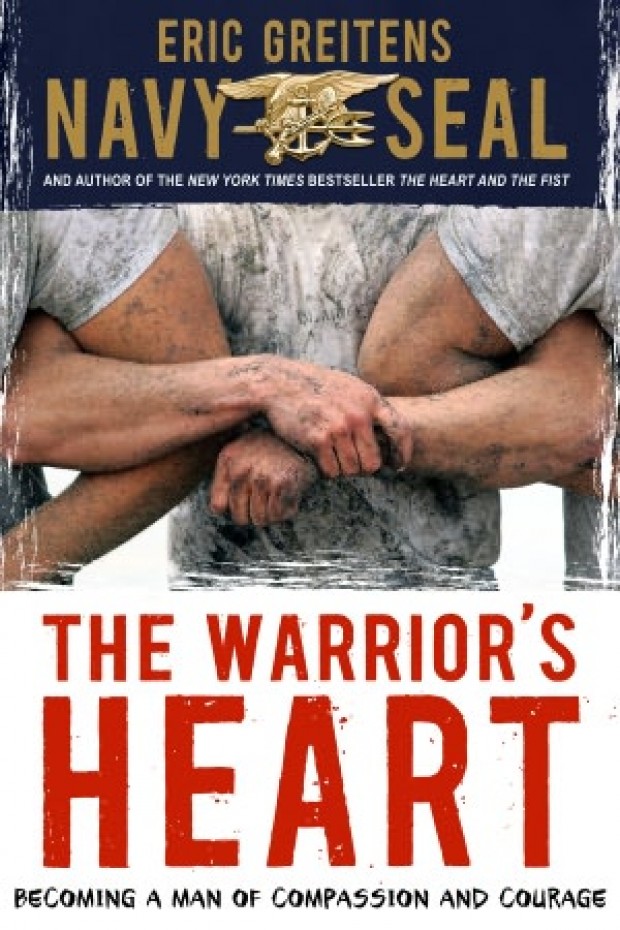
The Warrior's Heart

 After a brief discussion with the school librarian, I was directed to the new books in the library and I ran across The Warrior's Heart by Eric Greitens.  I recently read "I Am A Seal Team Six Warrior" and I was curious about how consistent the experiences are among Navy Seals.  Greitens makes quite the point to avoid falling into the "just-another-soldier" book category.  Instead, he approaches the story from the humanitarian aspect and he focuses first and foremost on the reasons he ended up pursuing the Navy Seals.

Greitens starts each new segment of his book with "what-if?" scenarios that then lead into the period of life that inspired each "what-if?" scenario. The book functions as part autobiography and part self-help/inspirational guide.  Because of this if feels a little awkward and preachy at times, but the preachiness is dismissible because of his experiences and sheer talent.  If I'm were to take advice, I'd take advice from a Oxford Scholar and a Navy Seal.  There are worse examples out there.

Greitens's story includes his part-time jobs in his neighborhood, his involvement in academics and athletics and then he quickly gets into talking about his humanitarian work and research in Croatia, Rwanda and Bolivia during his college years at Duke.  He tells of the mental scars on the children and the adults who try to help them.  They are war-torn and vulnerable.  He also sees how little the UN really does and is able to do-- by witnessing the aftermath of massacres. While at Duke, Greitens also takes up boxing and ends up receiving an assistantship in London as an Oxford Scholar.

As Greitens term at Oxford comes to an end, he debates his potential paths-- all which seem to include lots of paperwork and deskwork. Instead, he somehow gets approached about joining the military and becoming a Navy Seal-- assuming he'd pass the necessary tasks to become a Seal. He does and he tells of his strategies to master the long underwater swim and the "grinder" during Hell Week.

Overall, I appreciated his low-key, low-testosterone, level-headed approach for joining the military & pursuing his dream with the hopes of inspiring others.

The Lesson by Suzanne Woods Fisher

I began and finished The Lesson by Suzanne Woods Fisher during my winter break but found myself unwilling to simply sit down and write about it.  I may have been antsy from too much sugar and decaf coffee, but I can't be sure.  Nonetheless, today seemed like the perfect day to finally write because I'm off of school due to a Snow Day and unlike most people, I'm not good at relaxing, so I decided to get caught up on the blog.

Since reading The Lesson, I've recommended the book to "my side-kick" (a student who seeks me out every day during her lunch to talk) and she and I both thoroughly enjoyed the story and the characters.  I recommended that my side kick read the book as well, despite her busy schedule, because she reminds me of the main character, Mary Kate and she happened to be going through some of the same experiences. Mary Kate is a young Amish woman on the verge of discovering her purpose.  She's torn about the church because she's ready to leave town and travel to assuage her restlessness, rather than simply commit, find a husband and begin a family.  M.K.'s life takes a quick turn as she literally runs into the town school teacher and the teacher "falls ill" enough to need substitute coverage for the students.  In order to help M.K. take on some responsibilities, M.K. is volunteered by her family to be the substitute teacher.

In the meantime, a young man shows up at M.K.'s family farm and is looking for work in order to help support himself and his sister.  This young man, Chris, is technically "English,"  but he's adopted the ways of the Amish because of a foster mother he previously had when he lived in Ohio.  Chris is very cautious not to tell of his origins for fear that he might arise suspicions about his family life.

Mary Kate is increasingly frustrated by the teaching position because she realizes that despite being bright and well-read that teaching isn't exactly the easiest-- particularly when it comes to managing the behavior of the students and getting some of the "big boys" to buy into the whole notion of education.  Just as she's expected to be relieved by the old teacher, she finds out the old teacher will NOT be returning to the position and now M.K.'s stuck in charge.  In order to help her along, M.K's step mother sets up a meeting with an elderly former teacher and M.K. begins meeting this older firecracker-of-a-woman on a regular basis, finding herself drawn to her new mentor.    

Mary Kate and Chris do begin a relationship, but it has its complications with Chris's family's past and with Mary Kate's best male friend (Jimmy) deciding that he is in love with her. At the same time, Chris's younger sister, Jenny, finds a mentor with Mary Kate's step-mother, Fern.  It would seem that all's-well-that ends well, but instead Suzanne must throw another twist (or four) into the story (which I don't have the heart to reveal!). All I can say is that I appreciate the twists because they reflect the complications of life and they are also strangely calming because the characters endure hardship, but with help from those around them, and with their faith, they manage to realistically persevere.  All is not fixed, but they continue to grow in faith and spirit. Because of Fisher's multifaceted characters and well-woven plots and sub-plots, I will continue to read her work and recommend it to others. 

Tuesday, October 2, 2012

Better Off: Flipping the switch on technology


I forget when I first purchased Better Off by Eric Brende, but I recently thanked myself for doing so.  I originally bought the book figuring that it might work well for some of my students for the unit I have based around a biography/autobiography.  Because I'm an enviro-nerd and I know a few of my students are also enviro-nerds, I figured the book might be a refreshing change of pace from the usual my-life-is-awesome-/ my-life-used-to-suck-biography.

The premise is that Eric Brende documents his research of what it's like for a recent college grad to live without electricity on a small farm in a community full of others who have vowed to stay off the grid. Brende and his wife spend 18 months learning the ropes of the community and of existing without being dependent on electricity and for the most part without any reliance on fossil fuels.

Eric, an MIT grad, joins with Mary and they are set up on a small farm in a community of Amish farmers.  Eric and Mary soon realize that in order to learn the ways of their community, that socializing takes place during work sessions in the garden, at barn raisings and in the kitchen canning and cooking. Rather than most people setting time aside for socializing, this community uses communal tasks to get to know one another.  Eric also realizes that the work no longer feels like work when there are others involved.  He compares it to Tom Sawyer and white washing.

While learning about farming and beginning to rely on their bikes, Eric and Mary shed numerous pounds and realize that they're more fit than before.  They also start to realize that they aren't the only ones in the community who have chosen to move in to take advantage of the community closeness and to liberate themselves from the shackles of energy consumption.

As the story progresses, Mary becomes pregnant and the two prepare for the pregnancy while farming pumpkins and they even purchase a horse and buggy.  There were a couple things that struck me about the story: 1. Eric worked largely with the men and Mary worked largely with the women so it seemed to me that in some ways both were missing out on the knowledge of the work the other genders were participating in.  I realized that I'd be bummed if I wouldn't be involved in the field and barn tasks because of the division of labor based on sex (though Eric gets into a debate about this exact topic with some scholars and he refutes it by stating that it's not patriarchial, but instead that often the women shoo off the men because the men haven't completed to cooking, cleaning, etc. to the ladies' standards). 2. I appreciated the Eric admitted that he and Mary sometimes used the car for get-a-ways even though he knew that it was wasteful.  I appreciate that he didn't keep that from his readers and I think it shows how ingrained travel is with our cultural expectations.  I'm glad he showed this restlessness and the emotional side of consuming energy, which I feel like rarely gets addressed.  3. I would have liked to see some of Mary's thoughts incorporated into the book to give her perspective as well.  It would have been very interesting to see one chapter by him and then a chapter by her based during the same time frame in order to get a variety of perspectives on the experiment.  I fee like the diversity of perspective based on her gender could be another great layer to the topic.

Next up:  Deep Economy by Bill McKibben (another enviro-read!)